




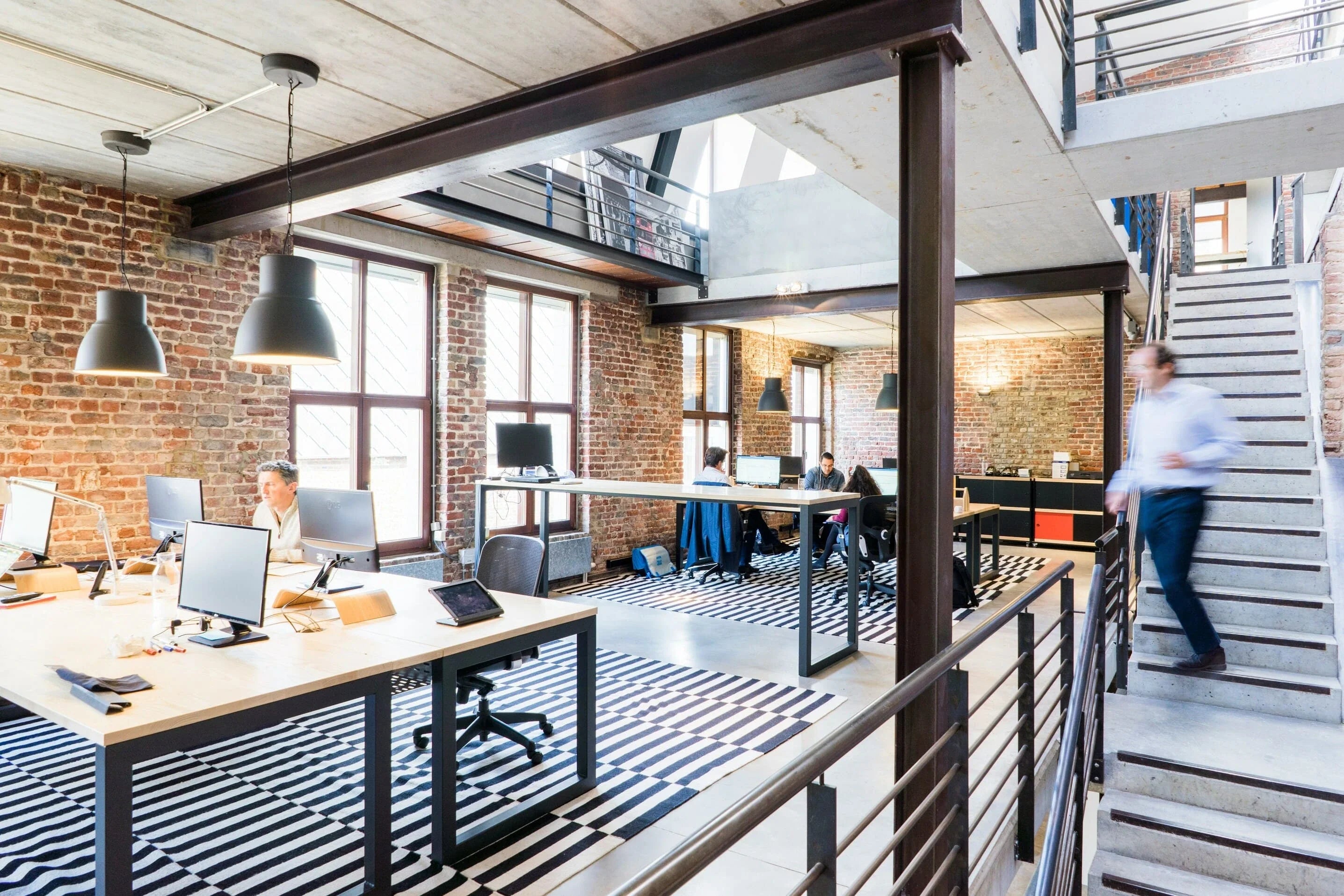
Designing an open-plan office requires a thoughtful approach to combine functionality, comfort and productivity .
Whether it's to promote communication between your teams, optimize available space or create an environment conducive to concentration, open spaces contribute significantly to the dynamics of a company.
In this article, we give you our advice on how to set up a collaborative workspace .
The advantages of a collaborative workspace
Promote communication and collaboration
Open-plan layout promotes fluid communication between colleagues , eliminating the physical barriers of closed offices.
A well-thought-out layout with dedicated areas for interaction, such as shared tables, can encourage spontaneous discussions and enriching collaborations .
For example, in a digital development-focused start-up, a central space with sofas and an interactive whiteboard allows developers and designers to quickly share ideas, thereby strengthening collective results.

Stimulating creativity
Properly designing an open-plan office stimulates creativity through a dynamic and inspiring layout. Collaborative spaces equipped with modular furniture, such as poufs or adjustable coffee tables, help to make the environment less formal and more conducive to innovation.
Optimize available space
Open space layout allows for optimal use of even limited spaces .
Choosing compact and modular furniture, such as adjustable and stackable desks, can free up space for other functions.
Some companies, for example, have adopted "hot desk" office arrangements whereby each employee can choose a different workstation each day.
Reduce costs
One of the undeniable advantages of open-plan office layout is cost reduction .
By grouping all employees in the same area, it is possible to reduce costs related to partitions, heating and lighting.
What furniture should I choose for an open-plan office?
Modular and adjustable desks

In an open-plan office, desks are the central element. Modular and adjustable models, such as sit-stand desks, allow for individual ergonomic needs and different tasks to be met. They come in various sizes to adapt to all spaces.
Ergonomic office chairs

Choosing ergonomic office chairs in an open-plan office layout provides back support and promotes correct posture. They allow employees to remain active and focused during long working hours.
Bloon exercise balls encourage micro-movements and help maintain good posture naturally. Furthermore, the Bloon ball is a great alternative to traditional office chairs, as it allows you to stay active at work by performing stretches and exercises.
Storage solutions
Storage solutions must combine practicality and aesthetics.
Individual lockers and open shelving help keep the space tidy, which is essential in an open-plan office. Consider integrating storage modules into desks to optimize space.
Acoustic partitions, panels and dividers
Acoustic partitions play a vital role in controlling noise pollution. For example, some companies integrate sound-absorbing felt panels between each workstation, thereby reducing distractions and improving concentration.
Collaborative furniture
Modular tables, movable partitions, and a variety of seating options allow the space to be adapted to the needs of employees. These flexible solutions encourage interaction while offering comfort and functionality.
Good collaborative furniture helps to create an atmosphere conducive to collaboration and innovation.
What colors should be favored to promote concentration?
The influence of colors on productivity and mood
Colors have a significant impact on our mood and performance. For example, blue is often associated with serenity and promotes concentration, while green is known for its calming and balancing effect.
Yellow, meanwhile, stimulates creativity and brings a touch of positivity. Finally, red, although more intense, can energize and capture attention when used sparingly.
Soothing and stimulating colors
To create an atmosphere conducive to concentration, it's ideal to combine calming and stimulating colors. Shades like blue and green create a calm and relaxing environment, perfect for tasks requiring reflection.

Conversely, stimulating colors like orange or red can encourage energy and motivation, especially in collaborative or brainstorming spaces .
To bring clarity and visually enlarge the space
Light tones such as white, light beige, or pastels are perfect for creating a sense of brightness and openness in open-plan spaces. These shades reflect light and contribute to a bright and welcoming atmosphere.
These colours also make small spaces appear larger, creating a less oppressive and more welcoming atmosphere.
8 planning rules to follow
Maintain a distance between workstations

Maintaining an appropriate distance between workstations is essential to provide freedom of movement and preserve concentration. This reduces distractions and ensures personal space for each employee , thus promoting optimal working conditions.
Create functional areas
For a balanced work environment , specific zones must be defined: spaces for working in concentration, meeting rooms for exchanging ideas, relaxation areas for unwinding, and dedicated call areas to reduce noise.
Promote natural lighting

Natural light is a real asset in an open-plan office. It improves well-being, boosts productivity, and reduces eye strain. Positioning desks near windows or using glass partitions maximizes the diffusion of natural light throughout the space.
Reduce noise pollution
Noise can be a significant source of stress and distraction. Investing in acoustic panels, carpets, or soundproof partitions can reduce noise pollution in open-plan offices. Creating quiet zones or using noise-canceling headphones can also contribute to improving employees' auditory comfort.
Provide private spaces

To ensure a suitable working environment for everyone, it is essential to provide spaces for privacy .
These dedicated areas, such as closed booths or isolated meeting rooms, help to preserve discretion during sensitive discussions or to work in peace and quiet when necessary.
Use modular furniture
Modular furniture is an ideal solution for open-plan office layouts. It allows workspaces to be quickly adapted to different needs, whether to promote collaboration or to offer more privacy.
Adjustable desks, mobile partitions and multifunctional furniture are all examples of this flexible approach.
Ensure ergonomics adapted to each workstation
Ergonomic workstations help improve employee well-being and health.
Each workstation must be designed to minimize the risk of musculoskeletal disorders and improve employee comfort and productivity.
Keep the walkways clear

Smooth traffic flow in an open-plan office is essential for safety and organizational reasons. Aisles must be kept clear to allow for easy movement and prevent any risk of accidents.
A well-organized space contributes to better productivity and a pleasant working environment for everyone.
In conclusion, carefully designing a collaborative workspace by integrating flexible solutions adapted to employees' needs helps to promote their well-being, creativity and productivity.